


5 Best Tips for Divorce Mediation in NH
Table of Contents
- Tip 1: Prepare Your Financial Records Before the First Session
- Tip 2: Build a Divorce Mediation Checklist for Every Session
- Tip 3: Know What Not to Say During Divorce Mediation
- Tip 4: Ask the Right Divorce Mediation Questions Early
- Tip 5: Review Divorce Mediation Settlement Examples Before You Sign
- Frequently Asked Questions
Last Updated: October 6, 2026
Tip 1: Prepare Your Financial Records Before the First Session
Divorce mediation in NH works best when both sides show up with complete numbers. New Hampshire courts require full financial disclosure in divorce cases, and mediation runs on the same principle. If you walk in without documents, the session stalls.
Paperwork is key. Here is what to gather before your first session:
- Recent pay stubs from every job
- Last two years of tax returns
- Bank and retirement account statements
- Mortgage, car loan, and credit card balances
- Childcare, medical, and insurance costs
Put everything in labeled folders, one for income and one for debts. This turns a four-hour argument into a two-hour conversation.
What to Bring to Your First Mediation Session
Bring originals and two copies of each document. Organize them the same way every session so your mediator can find things fast.
Also bring a written list of your monthly expenses. Many people forget small recurring costs like subscriptions and school fees. Those add up, and they matter when you divide a budget.
The New Hampshire Judicial Branch self-help center explains the financial affidavit both spouses must file. Fill yours out before mediation day, not during it.
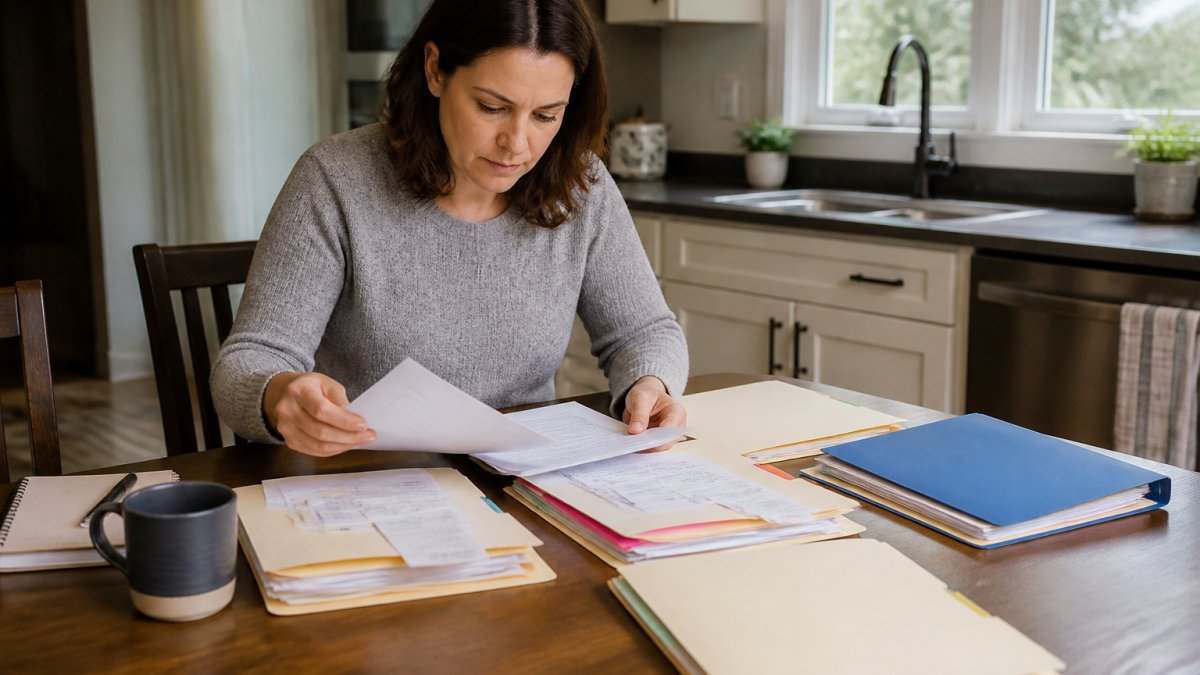
Sort your documents by category before you arrive, not by date. Mediators move through income, then assets, then debts. Matching that order saves everyone time.
Tip 2: Build a Divorce Mediation Checklist for Every Session
A divorce mediation checklist keeps you from forgetting the small stuff when emotions run high. Build one master list and copy it for each session. The keyword asks for five tips, but the single most useful tool you can carry into mediation is a checklist that turns those tips into action items.
Sessions often run smoother when each side arrives with a structured approach. Here is a concrete version you can copy.
Before the session
- Completed financial affidavit, signed and dated
- Pay stubs, tax returns, and account statements organized by category
- A written list of your three must-haves and three trade-able items
- Questions for the mediator, numbered so you can track answers
- A calculator, notebook, and pen (paper notes survive a dead laptop)
- Confirmation of the session time, location, and whether it is in person or remote
During the session
- State your goal for the session in one sentence at the start
- Raise topics in the same order the mediator uses: income, assets, debts, expenses, parenting
- Write down every tentative agreement in the exact words used
- Ask for a short break before responding to any proposal that surprises you
- Note any item left open and who is responsible for the next step
After the session
- Summarize agreements reached and items still open
- Confirm the next session date in writing before you leave
- Send any promised documents within the agreed deadline
- Update your must-have list if your priorities shifted
Keep the checklist in a shared folder or email thread so both sides work from the same version. Version drift, one person updating a list the other never sees, is a common cause of wasted session time.
Review the list the night before. Ten minutes of prep beats an hour of confusion.
Never leave a session without confirming the next date in writing. Gaps of several weeks let positions harden, and restarting costs more than staying on schedule. If the court ordered mediation, missed sessions can also trigger a status conference or a return to the judge.
Organizing these records now creates a necessary foundation for long-term stability, as sound financial advice after divorce remains essential for navigating the transition to independent living.
Tip 3: Know What Not to Say During Divorce Mediation
Knowing what not to say during divorce mediation matters as much as knowing what to ask. Mediation rewards calm, specific language. It punishes blame.
Avoid these phrases:
- “You always did this.”
- “That is not fair.”
- “I will never agree to that.”
- “My lawyer says…”
That last one is a trap. Mediation is your chance to speak for yourself. Threatening litigation shuts down negotiation fast.
Stick to facts and numbers. Say “I need $1,400 a month for housing” instead of “You are trying to leave me with nothing.”
Every sentence in mediation should either share a fact or propose a solution. Anything else is noise, and noise costs you time and money.
Tip 4: Ask the Right Divorce Mediation Questions Early
Good divorce mediation questions get answered in session one, not session five. Ask them before positions harden.
Start with these:
- How will we divide retirement accounts, and who files the paperwork?
- Who keeps the house, and how is the mortgage handled?
- What parenting schedule works for both households?
- How do we split debts, including cards in one spouse’s name?
- What happens if one of us misses a payment?
Ask about the mediator’s process too. How long do sessions run? How are agreements documented? What happens if we reach a partial deal?
Write your questions down and hand the list to your mediator at the start. This signals you came to resolve, not to argue.
Tip 5: Review Divorce Mediation Settlement Examples Before You Sign
Divorce mediation settlement examples show you what a finished agreement looks like before you write your own. Ask your mediator for sample language on property division, support, and parenting time. Read the samples closely. Notice how they handle gaps, like what happens if a spouse loses a job or wants to move.
How to Evaluate a Proposal Without Rushing
Score each proposal against your three must-haves. If it meets two, counter. If it meets none, say so plainly and explain why. A useful habit is to write the trade-off in one sentence: “I give up X to get Y.” If you cannot finish that sentence, the proposal is not ready.
Never sign in the same session you first see a proposal. Take it home. Read it twice. Sleep on it. Ask your attorney to review any agreement before you sign, especially if it touches retirement accounts, real estate, or a parenting plan that will govern years of exchanges.
| Proposal Type | What to Check | Common Risk |
|---|---|---|
| Property split | Asset values, transfer costs | Hidden liens on the house |
| Support terms | Duration, modification rules | No review clause |
| Parenting plan | Holidays, travel, exchanges | Vague pickup times |
| Debt division | Who pays what, by when | Joint cards left open |
When Mediation May Not Be the Right Path
Mediation assumes both sides can speak freely and negotiate in good faith. That assumption may be challenged when there are power imbalances, such as domestic violence, intimidation, coercive control, or a significant gap in financial knowledge between the parties.
Warning signs that mediation may not be appropriate:
- You fear your spouse’s reaction to something you say in session
- One side controls all the financial information and refuses to share records
- You feel pressured to sign before you have had time to review
- Your spouse hides assets, runs up joint debt, or ignores court orders
- You cannot speak without being interrupted or corrected
If any of these apply, tell your attorney before the next session. Options include separate caucus sessions where the mediator meets each side privately, having an attorney or advocate present, or stepping out of mediation and letting the court decide contested issues. Choosing litigation is not failure, it is a decision point that protects your interests.
A signed agreement is hard to undo. If a proposal feels rushed, unclear, or unsafe, the right move is to pause, not to sign. Time to review is a safeguard, not a delay tactic.
New Hampshire Judicial Branch self-help center
Frequently Asked Questions
What should I prepare before divorce mediation?
Gather recent pay stubs, tax returns, bank and credit card statements, mortgage or lease documents, retirement account statements, and any records of debts. A divorce mediation checklist helps you organize income, assets, debts, and expenses so you can speak to your financial situation with clarity. In New Hampshire, the Family Division may require financial affidavits, so having these documents ready before your first session saves time and reduces conflict.
What not to say during divorce mediation?
Avoid blaming language, threats about custody or money, and absolute statements like ‘I will never agree to that.’ Do not discuss irrelevant personal grievances or bring up past arguments that do not affect the settlement. Also, do not make promises you cannot keep or admit fault without legal advice. Stick to facts about income, assets, debts, and expenses, and keep the focus on mutual needs and a future-focused resolution.
Should I talk to a lawyer before divorce mediation?
Yes. A consultation with a divorce attorney before mediation helps you understand your rights, evaluate settlement examples, and identify what not to say during divorce mediation. An attorney can review your financial records, explain how New Hampshire law applies to your situation, and help you prepare a divorce mediation checklist. This preparation often leads to a more sensible agreement and reduces the risk of rushed decisions.
Is divorce mediation in NH court-ordered or voluntary?
In New Hampshire, courts may order mediation in contested divorce cases, but many couples also choose it voluntarily. The mediator’s role is to help you negotiate a settlement, not to give legal advice. If mediation fails, the case can proceed to a temporary hearing or litigation. Remote attendance may be available, and you can request a rescheduling if needed. Always check current Family Division procedures for your county.